
• Cosas belgas
  • Qué leo
  • Sobre mí

Maven Trap

~ Economía, RRII, periodismo

Maven Trap

Archivos de autor: suanzes

Feliz Navidad

24 martes Dic 2013

Posted by suanzes in Uncategorized

≈ Deja un comentario

BcPlzIQCUAAJlNE.jpg large

The time draws near the birth of Christ
The moon is hid; the night is still;
The Christmas bells from hill to hill
Answer each other in the mist.

Four voices of four hamlets round,
From far and near, on mead and moor,
Swell out and fail, as if a door
Were shut between me and the sound:

Each voice four changes on the wind,
That now dilate, and now decrease,
Peace and good-will, good-will and peace,
Peace and good-will, to all mankind.

This year I slept and woke with pain,
I almost wish’d no more to wake,
And that my hold on life would break
Before I heard those bells again:

But they my troubled spirit rule,
For they controll’d me when a boy;
They bring me sorrow touched with joy,
The merry merry bells of Yule.

With such compelling cause to grieve
As daily vexes household peace,
And chains regret to his decease,
How dare we keep our Christmas-eve;

Which brings no more a welcome guest
To enrich the threshold of our night
With shower’d largess of delight,
In dance and song and game and jest.

Yet go, and while the holly boughs
Entwine the cold baptismal font,
Make one wreath more for Use and Wont,
That guard the portals of the house;

Old sisters of a day gone by,
Gray nurses, loving nothing new;
Why should they miss their yearly due
Before their time? They too will die.

With trembling fingers did we weave
The holly round the Christmas hearth;
A rainy cloud possess’d the earth,
And sadly fell our Christmas-eve.

At our old pastimes in the hall
We gambol’d, making vain pretence
Of gladness, with an awful sense
Of one mute Shadow watching all.

We paused: the winds were in the beech:
We heard them sweep the winter land;
And in a circle hand-in-hand
Sat silent, looking each at each.

Then echo-like our voices rang;
We sung, tho’ every eye was dim,
A merry song we sang with him
Last year: impetuously we sang:

We ceased: a gentler feeling crept
Upon us: surely rest is meet.
«They rest,» we said, «their sleep is sweet,»
And silence follow’d, and we wept.

Our voices took a higher range;
Once more we sang: «They do not die
Nor lose their mortal sympathy,
Nor change to us, although they change;

«Rapt from the fickle and the frail
With gather’d power, yet the same
Pierces the keen seraphic flame
From orb to orb, from veil to veil.»

Rise, happy morn, rise, holy morn,
Draw forth the cheerful day from night:
O Father, touch the east, and light
The light that shone when Hope was born.
_Second Year._

Again at Christmas did we weave
The holly round the Christmas hearth;
The silent snow possessed the earth,
And calmly fell on Christmas-eve:

The yule-clog sparkled keen with frost,
No wing of wind the region swept,
But over all things brooding slept
The quiet sense of something lost.

As in the winters left behind,
Again our ancient games had place,
The mimic picture’s breathing grace,
And dance and song and hoodman-blind.

Who show’d a token of distress?
No single tear, no mark of pain:
O sorrow, then can sorrow wane?
O grief, can grief be changed to less?

O last regret, regret can die!
No–mixt with all this mystic frame,
Her deep relations are the same,
But with long use her tears are dry.
_Third Year._

The time draws near the birth of Christ;
The moon is hid, the night is still;
A single church below the hill
Is pealing, folded in the mist.

A single peal of bells below,
That wakens at this hour of rest
A single murmur in the breast,
That these are not the bells I know.

Like strangers’ voices here they sound,
In lands where not a memory strays,
Nor landmark breathes of other days,
But all is new unhallow’d ground.

To-night ungather’d let us leave
This laurel, let this holly stand:
We live within the stranger’s land,
And strangely falls our Christmas-eve.

Our father’s dust is left alone
And silent under other snows:
There in due time the woodbine blows,
The violet comes, but we are gone.

No more shall wayward grief abuse
The genial hour with mask and mime;
For change of place, like growth of time,
Has broke the bond of dying use.

Let cares that petty shadows cast,
By which our lives are chiefly proved,
A little spare the night I loved,
And hold it solemn to the past.

But let no footsteps beat the floor,
Nor bowl of wassail mantle warm;
For who would keep an ancient form
Thro’ which the spirit breathes no more?

Be neither song, nor game, nor feast;
Nor harp be touch’d, nor flute be blown;
No dance, no motion, save alone
What lightens in the lucid east

Of rising worlds by yonder wood.
Long sleeps the summer in the seed;
Run out your measured arcs, and lead
The closing cycle rich in good.

Ring out wild bells, to the wild sky,
The flying cloud, the frosty light:
The year is dying in the night:
Ring out, wild bells, and let him die.

Ring out the old, ring in the new,
Ring, happy bells, across the snow;
The year is going, let him go;
Ring out the false, ring in the true.

Ring out the grief that saps the mind,
For those that here we see no more;
Ring out the feud of rich and poor;
Ring in redress of all mankind.

Ring out the slowly dying cause,
And ancient forms of party strife;
Ring in the nobler modes of life,
With sweeter manners, purer laws.

Ring out the want, the care, the sin,
The faithless coldness of the times;
Ring out, ring out, my mournful rhymes,
But ring the fuller minstrel in:

Ring out false pride in place and blood,
The civic slander and the spite;
Ring in the love of truth and right,
Ring in the common love of good.

Ring out old shapes of foul disease;
Ring out the narrowing lust of gold;
Ring out the thousand wars of old,
Ring in the thousand years of peace.

Ring in the valiant man and free,
The larger heart, the kindlier hand;
Ring out the darkness of the land,
Ring in the Christ that is to be.

Tennyson. A Grief at Christmas.
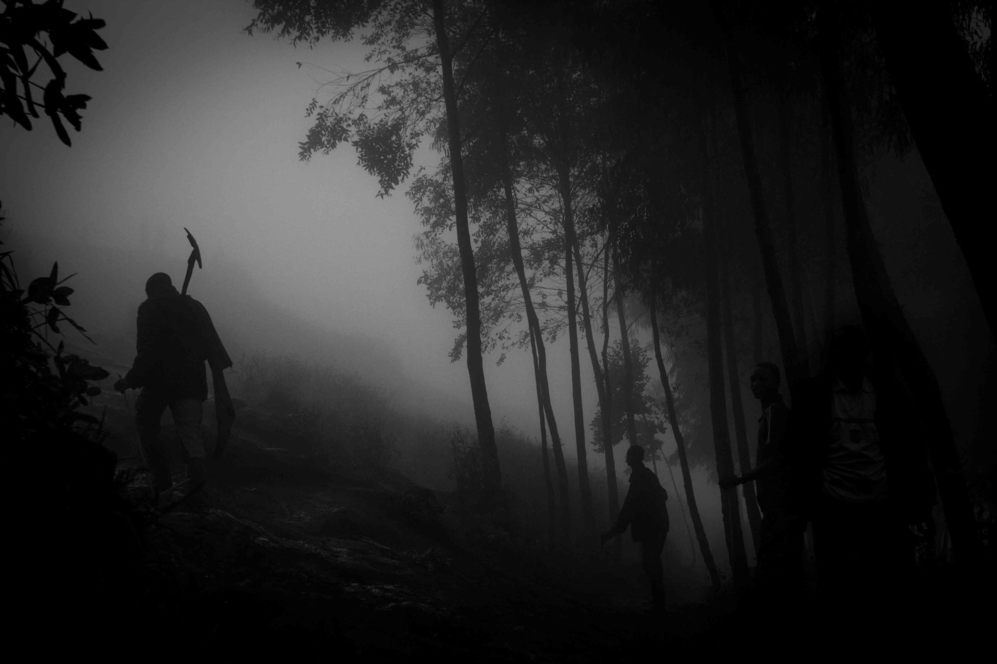
Navidad en el Congo

23 lunes Dic 2013

Posted by suanzes in Historias, Periodismo

≈ 1 comentario

coltan

Lo bueno de tener un blog es cuando alguien confunde lo que haces con periodismo puedes corregir el error con facilidad y señalar la dirección correcta.

Alberto Rojas y Raquel Villaécija están empeñados en reconociliarme con la profesión. Lo hicieronen verano con Las cicatrices de Ruanda. Y lo han repetido ahora desde el Congo. Hay poco que pueda decir, sólo darles las gracias.

Leed.

I- Ataúdes de colores para la industria de la muerte. El señor Mukendi, el ebanista más veterano de Goma

II- En la patrulla nocturna del comandante Rommel. Tropas indias, miedo africano.

III- Las sultanas del Apolo. El barrio de las prostitutas huele a polvo y sabe a miseria.

IV- Jackie, la zurda. Boxeo e igualdad entre ruínas.

V – Viaje al infierno del coltán. Minas mortales en las montañas de Masisi.

VI – El taller de las mujeres rotas. En el quirófano del doctor Paluku, el lugar más limpio del Congo.

VII — Los niños de las piernas de hierro. En el rincón de Louis, el Gepeto congoleño.

VIII – El coronel Mamadu contra los yonkis del mal. El héroe de Goma es políglota, polígamo, educado y peligroso.

IX – Las pesadillas de Pacience’. Lla memoria de los niños que nunca han conocido la paz

Los enemigos del dólar

22 domingo Dic 2013

Posted by suanzes in Crítica de Ideas, Economía

≈ 1 comentario

«Los enemigos del dólar«. La crítica de Ideas de hoy, sobre divisas, bitcoins y su verdadero enemigo, los pantalones vaqueros ajustados, ya está colgada en elmundo.es


Lecturas de Domingo

22 domingo Dic 2013

Posted by suanzes in Lecturas de domingo

≈ Deja un comentario

– 5 Reasons Why 2013 Was The Best Year In Human History. Vía Beatriz Hoya.

– Margaret MacMillan: «The 1914 Christmas armistice: a triumph for common humanity«.

– Alberto Rojas y Raquel Villaécija: «Los niños de las piernas de hierro«. En el taller de Louis, el Gepeto congoleño.

– Martín Mucha: «El cuento de Navidad del albino negro que llegó en patera«.

– Historión brutal. Josh Levin: «The Welfare Queen» In the 1970s, Ronald Reagan villainized a Chicago woman for bilking the government. Her other sins—including possible kidnappings and murders—were far worse.

– Una muy chula: «The Sculpture on the Moon«. Scandals and conflicts obscured one of the most extraordinary achievements of the Space Age. Vía Alfonso Romay.

– Ha muerto Sree Uthradom Thirunal Marthanda Varma, el guardián del templo de las riquezas.

– «Want to volunteer to help homeless people this Christmas? Please don’t«.

– «Odón de Buen: toda una vida«, vía Caballero.

– «Cows might fly«. When the land is all filled up, it’s time to get creative with it, as small countries like Switzerland already know». Vía Alberto Nardelli.

– «Inside the Box«. La creatividad y la innovación tienen mucho prestigio. Es solo retórica. En realidad las detestamos. Vía Ramón González Ferriz.

– If a Story Is Viral, Truth May Be Taking a Beating. Yo me comí dos de las tres primeras que cita.

– Álex Grijelmo: «Caerán precipitaciones en forma de nieve”. Vía Jaime Mora.

– Y para acabar con una sonrisa, Alberto Sicilia: «El físico que se declaró a su mujer con un artículo científico«.

Los mejores libros de 2013

18 miércoles Dic 2013

Posted by suanzes in Lecturas, Surtido de links

≈ 1 comentario

– Una institución. «The 10 Best Books of 2013» de The New York Times. Ficción y no ficción.

– La larguísima lista del Financial Times (por categorías, infinitas categorías). Los quiero todos.

– Fundamental, como siempre, la lista de The Economist. A Bountiful Offering. Un vídeo de su editora de libros y staff de la revista hablando de Bach, la Primera Guerra Mundial (Peter Hart), Thatcher o Stephen King (el economista).  Y dos novelas, para que no se diga.

– Una de las más ‘personales’, la de The New Republic. Con novedades y clásicos como Leopardi o Tucidides.

– En la sección ‘Qué leo‘ de este blog están los libros que he leído yo en 2013. Sólo libros, tanto ensayo como novela, en orden cronológico. La semana que viene, que libro, trataré de hacer mi lista de favoritos.

– Preciosa, cuidada, detallista, muy currada. María Popova, en Brain Picking escoge los que para ella son

* Los 13 mejores libros de Psicología y Filosofía.

* Los 13 mejores libros de Biografía, Memorias e Historia.

* Los mejores libros de Writing and Creativity.

* Los mejores libros de Animales y Mascotas.

– En El Confidencial, y por fin en español, «La mejor cosecha literaria«.

– Lara Hermoso, en su blog, recoge sus 12 libros favoritos.

– Los mejores libros del año para El País.

– ABC: «Los mejores libros de 2013«.

– Todavía no sé qué es Mashable. Ni entiendo muy bien sus libros. Por eso hay que mirar la lista: 11 Best YA Books of 2013.

– La selección de Think Progress: «The ThinkProgress Year In Culture: The Best — And Worst — Books Of 2013.

– La lista de los trabajadores de Slate.

– El Irish Times le pregunta a 20 personas diferentes.

Miradas, listas y periodismo vomitivo

16 lunes Dic 2013

Posted by suanzes in Surtido de links

≈ Deja un comentario

– El Guardián: «La mirada de Bill«. Un texto precioso sobre un personaje increíble, un imprescindible de Nueva York.

– Daniel Capó: «La lista de Brodski«. «Igual que el esnob excava con esfuerzo un túnel para asomarse al misterio de la belleza, Brodsky apelaba a la dificultad perenne de las grandes obras del pasado como criterio fundacional del Humanismo europeo. Hay que suponer que cada época determina cuáles son sus ideales. Ganar exige también perder. Y de este modo, el pasado, incluso el más cercano, se sumerge lentamente en las sombras de lo que ya nos resulta extraño, fecundo y misterioso». Vía Metaboles.

– Un post obligatorio (de nuevo) de Andrés Rodríguez: «Todo por el clic: Del periodismo de suicidios al periodismo de comida caducada«. Nos dan collejas más que merecidas y no aprendemos.

– Jesús Alfaro: «Nuestros maestros y profesores están demasiado aislados«.

Lecturas de Domingo

15 domingo Dic 2013

Posted by suanzes in Lecturas de domingo

≈ 1 comentario

– Esto es el Wall Street Journal es ALUCINANTE: «The Lobotomy Files«. La historia de cómo EEUU lobotomizó a más de 2.000 veteranos de la Segunda Guerra Mundial con problemas psiquiátricos. El WSJ ha encontrado los archivos y ha publicado un especial increíble en tres partes. Hablando con algunos de los pacientes, con los médicos y con las familias. Es un escándalo de investigación. Por ejemplo, el vídeo sobre uno de ellos: «Inside the Mind of Roman Tritz«.

– Eso es tremendo también: «The boy whose brain could unlock autism«. Autism changed Henry Markram’s family. Now his Intense World theory could transform our understanding of the condition. Henry es hijo de Henry Markram, un afamado neurólogo del que ya hemos hablado aquí por esto.

– «‘I thought I was on The Truman Show‘». Jonny Benjamin is only 26 but has been coping with mental illness since childhood. Now he video blogs about it and has recently received an award for his work.

– Manuel Ansede: «El divulgador de la ciencia acosado por la Iglesia«. Una biografía rescata la historia de Odón de Buen, “propagandista” de la ciencia y pionero del ecologismo cuyos libros fueron prohibidos por el Papa y perseguidos por la Iglesia

– «23 and You«. Does that commercial DNA test you just bought violate somebody else’s privacy?

– En Time, un largo perfil: «Edward Snowden, The Dark Prophet«.  He pulled off the year’s most spectacular heist. Exiled from his country, the 30-year-old computer whiz has become the doomsayer of the information age.

– Y relacionada, Jonathan Kaiman en Foreign Policy: «Hack Tibet«. Welcome to Dharamsala, ground zero in China’s cyberwar.

– Francis Fukuyama: «The Decay of American Political Institutions«. We have a problem, but we can’t see it clearly because our focus too often discounts history.

– Tom Nichols: «The Death of Expertise«. Vía Manel Gozalbo.

-Malcolm Gladwell:  «Being Nice Isn’t Really So Awful«. Una réplica al“ Snark Against Smarm“ de la semana pasada. Vía Mónica San Miguel.

– Una corta pero interesante: «Some Animals Don’t Get Weaker With Age«. De cangrejos y caracoles.

Y relacionada: Amit Majmudar: «The Brains of Animals«.

– Y para acabar, James Bennet en The Atlantic:  «Against ‘Long-Form Journalism‘». When it comes to great magazine writing, what’s in a name?

Buen domingo a todos.

El fin del poder: entrevista a Moisés Naím

14 sábado Dic 2013

Posted by suanzes in Economía, Entrevista, Filosofía, Historia, Periodismo

≈ 1 comentario

En El Mundo de hoy, en la sección de El Mundo que viene, está mi entrevista a Moisés Naím. Venezolano, ex ministro y director durante 14 años de Foreign Policy, acaba de publicar El fin del poder.

La podéis leer en Orbyt: «El problema del poder es que para perdurar necesita una audiencia cautiva«.

O bien la versión de elmundo.es: «El poder, para perdurar, necesita una audiciencia cautiva«. Que es más larga e incluye unas cuantas preguntas que no cabían en el papel. Por ejemplo, por la situación de Venezuela y el chavismo.

Hay una respuestade Naím, al final, que tiene mucha más fuerza para ser titular: «Los estados no son capaces de proveer los niveles de empleo que proveen los mercados. Ningún gobierno ha creado nunca la prosperidad que pueden crear los mercados.»

Desde luego era mucho mejor titular, y más llamativo para un económico. Pero no era justo. Al inicio de la respuesta anterior, cuando dice «Hay un debate maniqueo y poco útil, el de Estado contra mercado. Es una pérdida de tiempo. No hay duda de que necesitamos al mercado y de que necesitamos al Estado. Donde hay duda es en el cómo los combinamos», decía también algo así como que hay que prescindir de grandes frases grandilocuentes y concentrarse en el trabajo del día a día como hormiguitas. Corté esa parte de la entrevista (más de 50 minutos de entrevista) porque no cabía.

Me pareció poco apropiado utilizar la frase siguiente, más grandilocuente, como idea resumen de todo el texto. Y más si el libro está dedicado al poder.

Una lástima también que la mejor frase de todas «Hoy es más fácil matar a 100 millones de personas que controlarlas» sea de Zbigniew Brzezinski.

Diablos, pobreza y simposios envenenados

12 jueves Dic 2013

Posted by suanzes in Surtido de links

≈ Deja un comentario

– David Jiménez sobre violadores, asesinos y terroristas: «Entrevista con el diablo«.  Totalmente de acuerdo con él.

– Antológico post de 2005 de Tyler Cowen: «Why don’t people have more sex?«. El razonamiento de un economista. Un ejemplo: «Sex stops being fun when you do it to close a gap between your marginal utilities.  It requires spontaneity or some other quality inconsistent with the classical model of the consumer and the equation of marginal rates of substitution».

– «Historiadores y expertos critican el maniqueísmo de un congreso envenenado«. Con las opiniones de García Cárcel, Álvarez Junco, Borja de Riquer, Joaquim Albareda, Enric Ucelay da Cal o Andreu Mayayo.

– «Historiadores contra ‘el absurdo y la propaganda‘». Con la opinión de Luis Ribot, Fernando García de Cortazar, García Cárcel, Juan Carlos Losada, Julio Gil Pecharromán, Albert Balcells, Asunción Domenech, Félix Ovejero y Andreu Navarra.

– «El número total de personas subalimentadas en todo el mundo ha disminuido un 17 % en las últimas dos décadas. Sin embargo, ocho de cada diez españoles (79 %) -datos de Metroscopia- opina que hay cada vez más personas que pasan hambre en el mundo«.

– Arcadi Espada: «Un farol«. Sobre «el interés público de las noticias y la posibilidad de que puedan perjudicar a alguien». A raíz del secuestro de periodistas y el blackout informativo.

Historias de ajedrez

09 lunes Dic 2013

Posted by suanzes in Ajedrez, Historias

≈ 4 comentarios

El ajedrez se presta a las mejores historias literarias. Lo tiene todo. Inteligencia y belleza, pasión y locura. Genios, genios despistados y genios locos. Tiene violencia y juego limpio, odios y amores. Tiene Guerra Fría y guerras calientes. El ajedrez es la vida misma.

Hay miles de relatos fantásticos. Aquí, en español, van unos cuantos, sin ningún criterio en particular salvo el estético.

– E. J. Rodríguez tiene dos series maravillosas en ot Down que son de obligada lectura.

La primera, en dos partes. sobre el duelo entre Capablanca y Alekhine. Mi favorito. Delicioso.  Los Mozart y Salieri del ajedrez (I) y Los Mozart y Salieri del ajedrez (y II)

La segunda, sobre Bobby Fisher, en siete partes:1) La infancia del pequeño diablo. 2) La infancia del pequeño diablo (II). 3) L’enfant terrible. 4) ¿Qué le pasa a Fisher?  5) La máquina de aplastar rivales. 6) Comienza la guerra. 7) En la cumbre.

– «Capa, hijo de Caissa«. Una larga y estupenda de Guillermo Cabrera Infante sobre su compatriotra Capablanca. Persona, vistosa, literaria, magnífica. Publicada en Alfaguara, en «Vidas para leerlas». Y que me descubrió, hace muy poco, El Guardián.

– Una obligatoria en toda recapitulación: «Novela de ajedrez«, de Stefan Zweig, la primera que descubrí, hace años. La edición de Acantilado es estupenda.

– Tsevan Rabtan, también en Jot Down: «En busca de Mijaíl Botvínnik«. Magnífica, profunda, incisiva.

– Arturo Pérez Reverte tiene varios articulos dedicados al ajedres. «El desayuno del ajedrecista» (sobre Ivanchuk), es uno de mis favoritos..

– Otra de E. J. Rodríguez: «Paul Morphy, el campeón que odió el ajedrez«.

– En el blog de Federico Marín Bellón: «Las diez historias de ajedrez favoritas de los lectores«.

– Y no son historias ni literatura, pero son curiosidades y muy divertidas. Vía Anton Pombo.

← Entradas anteriores
Entradas recientes →

Suanzes

Tuits de Suanzes

Blogroll

  • A Don's life
  • Alexis Madrigal
  • Alphaville
  • Arts & Letters Daily
  • Barcepundit
  • Brain Pickings
  • Clive Crook
  • Der Spiegel
  • Economics Intelligence
  • El Sueño de Jardiel
  • El valor del dinero
  • Energy, Markets and Money
  • Felix Salmon
  • Financial Times
  • Free Exchange
  • Hispalibertas
  • Ideas Market
  • In Focus
  • Karl Whelan
  • Lealtad
  • Lens Blog
  • Letras Libres
  • Linkiesta
  • London Review of Books
  • Marginal Revolution
  • Nada es gratis
  • Obamaworld
  • Piedras de Papel
  • Politikon
  • Project Syndicate
  • Revolución Naturalista
  • Sintetia
  • The Browser
  • The Economist
  • The Monkey Cage
  • The New York Times

Archivos

  • diciembre 2025
  • marzo 2025
  • enero 2025
  • diciembre 2024
  • diciembre 2023
  • diciembre 2022
  • enero 2022
  • diciembre 2021
  • abril 2021
  • enero 2021
  • diciembre 2020
  • junio 2020
  • abril 2020
  • febrero 2020
  • diciembre 2019
  • noviembre 2019
  • mayo 2019
  • abril 2019
  • marzo 2019
  • febrero 2019
  • enero 2019
  • diciembre 2018
  • noviembre 2018
  • septiembre 2018
  • julio 2018
  • junio 2018
  • mayo 2018
  • abril 2018
  • marzo 2018
  • enero 2018
  • diciembre 2017
  • agosto 2017
  • julio 2017
  • mayo 2017
  • marzo 2017
  • enero 2017
  • diciembre 2016
  • noviembre 2016
  • julio 2016
  • junio 2016
  • mayo 2016
  • marzo 2016
  • febrero 2016
  • enero 2016
  • diciembre 2015
  • noviembre 2015
  • octubre 2015
  • septiembre 2015
  • julio 2015
  • junio 2015
  • mayo 2015
  • abril 2015
  • marzo 2015
  • febrero 2015
  • enero 2015
  • diciembre 2014
  • noviembre 2014
  • octubre 2014
  • septiembre 2014
  • agosto 2014
  • julio 2014
  • junio 2014
  • mayo 2014
  • abril 2014
  • marzo 2014
  • febrero 2014
  • enero 2014
  • diciembre 2013
  • noviembre 2013
  • octubre 2013
  • septiembre 2013
  • agosto 2013
  • julio 2013
  • junio 2013
  • mayo 2013
  • abril 2013
  • marzo 2013
  • febrero 2013
  • enero 2013
  • agosto 2012

Blog de WordPress.com.

Privacidad y cookies: este sitio utiliza cookies. Al continuar utilizando esta web, aceptas su uso.
Para obtener más información, incluido cómo controlar las cookies, consulta aquí: Política de cookies
  • Suscribirse Suscrito
    • Maven Trap
    • Únete a otros 269 suscriptores
    • ¿Ya tienes una cuenta de WordPress.com? Inicia sesión.
    • Maven Trap
    • Suscribirse Suscrito
    • Regístrate
    • Iniciar sesión
    • Denunciar este contenido
    • Ver el sitio en el Lector
    • Gestionar las suscripciones
    • Contraer esta barra
 

Cargando comentarios...